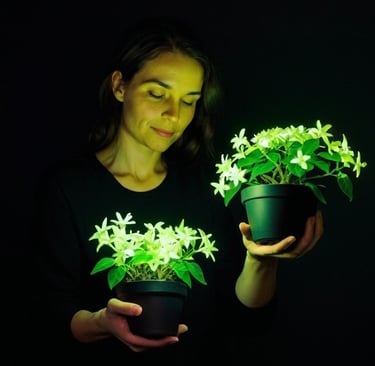
The Story Behind the Glow: How We Engineered Bioluminescent Plants
Bioluminescence has fascinated scientists and nature enthusiasts alike for centuries, with glowing organisms found in deep-sea creatures, fireflies, and fungi. Our goal was to harness this natural phenomenon and integrate it into everyday plant life—creating an entirely new way to experience nature at home. The Science Behind Our Glowing Plants At the core of our innovation is a set of genes derived from bioluminescent fungi. These genes enable plants to produce their own light without external chemical treatments or UV stimulation. By integrating this genetic pathway into plant cells, we created a self-sustaining bioluminescence system that glows consistently throughout the plant's life cycle. The Breakthrough: Overcoming Genetic Barriers One of the greatest challenges in developing bioluminescent plants was vector stability. The transformation process required a genetic vector capable of delivering and integrating the fungal bioluminescence pathway into plant cells while maintaining stability across generations. Early attempts resulted in plants with inconsistent or fading glow over time. Through extensive research and optimization, we established a stable genetic line that ensures continuous, reliable luminescence. A New Era of Living Light With this breakthrough, glowing plants are no longer just a laboratory experiment—they are now available for everyday use. Whether as ambient lighting, a unique decor element, or a conversation piece, bioluminescent plants offer a new way to appreciate both science and nature. This is just the beginning. As our research continues, we aim to refine and expand the range of bioluminescent plants available. Stay tuned for more innovations in plant biotechnology.